


TL;DR
- Use AI extraction where changing layouts make parser maintenance costly, and browser automation where the task requires interaction.
- Measure accepted records, field errors, freshness and operating cost before changing a working collector.
- Keep source evidence and failure records. Better models do not guarantee page access or current data, and predictions about future tools need to stay separate from measured results.
AI extraction and browser automation give scraping teams more ways to collect data. Planning for the next few years means deciding which of those capabilities improves your workload, how to measure the result, and how much authority to give an automated collector.
The practical question is which parts of a collector should change as models improve. Replacing a reliable parser with an LLM is not automatically an improvement. Nor does a more capable model make an inaccessible page available or a stale observation current.
The examples below distinguish capabilities available today from expectations about how collection systems may develop.
What has already changed
Extraction services can accept a natural-language field description and return structured data. Open-source crawlers can prepare Markdown for downstream models. Browser automation can operate on pages that need rendering or interaction. These capabilities make more implementation choices available; they do not remove the need to choose.
For example, ScrapeGraphAI Extract accepts a source and a requested structure. Crawl4AI's documentation describes crawling and extraction approaches that can be operated within your own stack. The difference matters operationally: a managed request and a browser worker you host have different failure modes and cost responsibilities.
There is also a change in how publishers' content can be discovered. Google documents AI features in Search, but says their inclusion relies on established SEO practices rather than a special AI markup requirement. Pages need to be eligible for indexing and for a Search snippet to qualify as supporting links. That describes Google's products, not a universal rule for every AI assistant. Google Search Central
Where a model helps, and where it does not
| Collection problem | A model may help with | What still needs an explicit solution |
|---|---|---|
| Similar records across different layouts | Mapping labels to a common schema | Verifying that the values refer to the right record |
| Long prose pages | Selecting passages relevant to defined fields | Preserving citations, dates, and omitted context |
| Complex navigation | Choosing an interaction or candidate link | Restricting destinations and actions |
| Missing or ambiguous information | Returning a supported partial record | Rejecting invented values and defining acceptance rules |
| Changing websites | Handling some layout variation | Detecting regressions and reviewing changed behavior |
The useful unit of evaluation is the task. “Extract the displayed price for this exact product variant” can be checked. “Understand this website” is too broad to become a dependable production acceptance test.
For a stable page with an unambiguous selector, deterministic extraction may remain the cheaper, easier-to-audit choice. When labels vary across sources, a model can be worth evaluating. These approaches can coexist in the same pipeline.
Expect more systems that combine methods
Our engineering expectation is that collectors will increasingly choose among an official API, a direct fetch, a rendered page, and semantic extraction. That is a design direction, not a claim about a measured industry adoption rate.
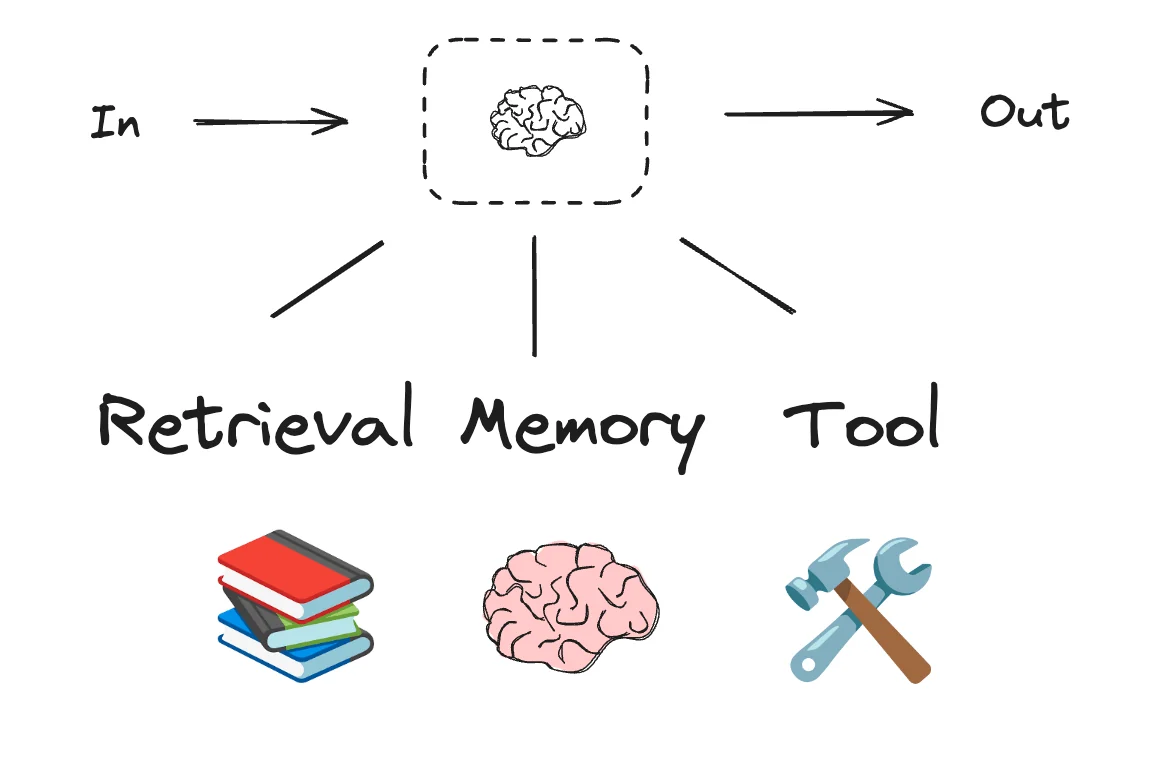 An augmented LLM connects to retrieval, tools and memory. This is a conceptual architecture, illustrated in LangChain’s documentation.
An API can provide a stable identifier and pagination. A direct fetch can cheaply retrieve a simple page. Rendering may be necessary when the required content is loaded by JavaScript. A model can then map irregular source text to a defined schema. Starting with the most expensive path for every URL wastes resources when an earlier stage already provides the needed data.
A fallback should have a reason. Record whether rendering was selected because the fetched page lacked the target element, whether the target required a different authorized access method, and whether the final record passed validation. Otherwise, a pipeline can spend more on retries while producing no more useful records.
For a small runnable example of field checks and a stored record, use the product extraction example. Its assertions check the title, product identifier, amount and currency against the named source.
Data provenance becomes part of the record
A generated answer can sound confident even when its underlying observation is old or incomplete. Store the source URL, collection time, extraction version, and evidence for the fields that matter. When a downstream answer cites a price, it should be possible to identify the product variant, market, and observation that supported it.
Consider a supplier directory. The supplier's address is an extracted fact if it appears on the source page. An industry classification may be a derived judgment. A prediction about purchasing intent is a separate inference. Putting all three into one unlabeled JSON object makes later review difficult.
Provenance also helps when a page disappears. Retaining an authorized snapshot or relevant source excerpt can explain what the system saw at the time. Set retention according to the data's purpose and permissions; keeping every page indefinitely is not a requirement for traceability.
Freshness needs a budget
More frequent collection produces newer observations, but the right interval depends on the decision. A price alert may need a shorter refresh interval than a company description. Re-fetching the entire directory every minute is an expensive way to discover that most descriptions did not change.
Set freshness requirements by field or source. Record the last successful observation separately from the last attempted request. A failed refresh must not give an old record a new timestamp that suggests it was checked successfully.
For a proposed schedule, calculate the number of source visits, expected output records, and the cost of retries. Add validation and review time. The ROI calculator shows how a workflow can become more expensive when maintenance exceeds the expected saving.
Browser agents need bounded authority
An agent that can choose its next page is useful for navigation. The same freedom can lead it outside the intended source list or into an action the task did not require. Define the allowed domains, maximum steps, spending limit, and permitted actions before starting a run.
Keep reading separate from consequential actions. A supplier page should not be able to instruct the collector to email records, submit a form, or reveal an API key. Treat page content as untrusted input, including instructions embedded in text, images, or extracted fields.
A crawler also needs a stopping condition. “Continue until you have enough information” is hard to budget and audit. “Visit at most 20 product pages from this category and return the five specified fields” gives the application a result it can check.
Quality claims should become more specific
Accuracy depends on what is being measured. Correctly returning a title is different from identifying the current offer among several prices. A schema-valid response is different from a factually correct record. A successful request is different from a completed job.
Build a reviewed sample with missing fields, changed layouts, duplicate products, and inaccessible pages. Keep failures in the results. Measure field correctness and completeness separately, then connect them to the application's acceptance rules.
When a vendor publishes a percentage, look for the target mix, sample size, collection date, definition of success, and treatment of failures. Without those, the number cannot tell you how the service will behave on your workload.
What to invest in now
Make the output schema independent of the collector so you can change retrieval methods without rebuilding downstream systems. Add a reviewed regression set before adding a second model. Record accepted records and cost per run, then identify the stage responsible for failures.
Those investments remain useful if models improve quickly, if a target launches a better API, or if browser access becomes harder. They let you adopt a new capability because it improves a measured task, with evidence that the change is worth keeping.